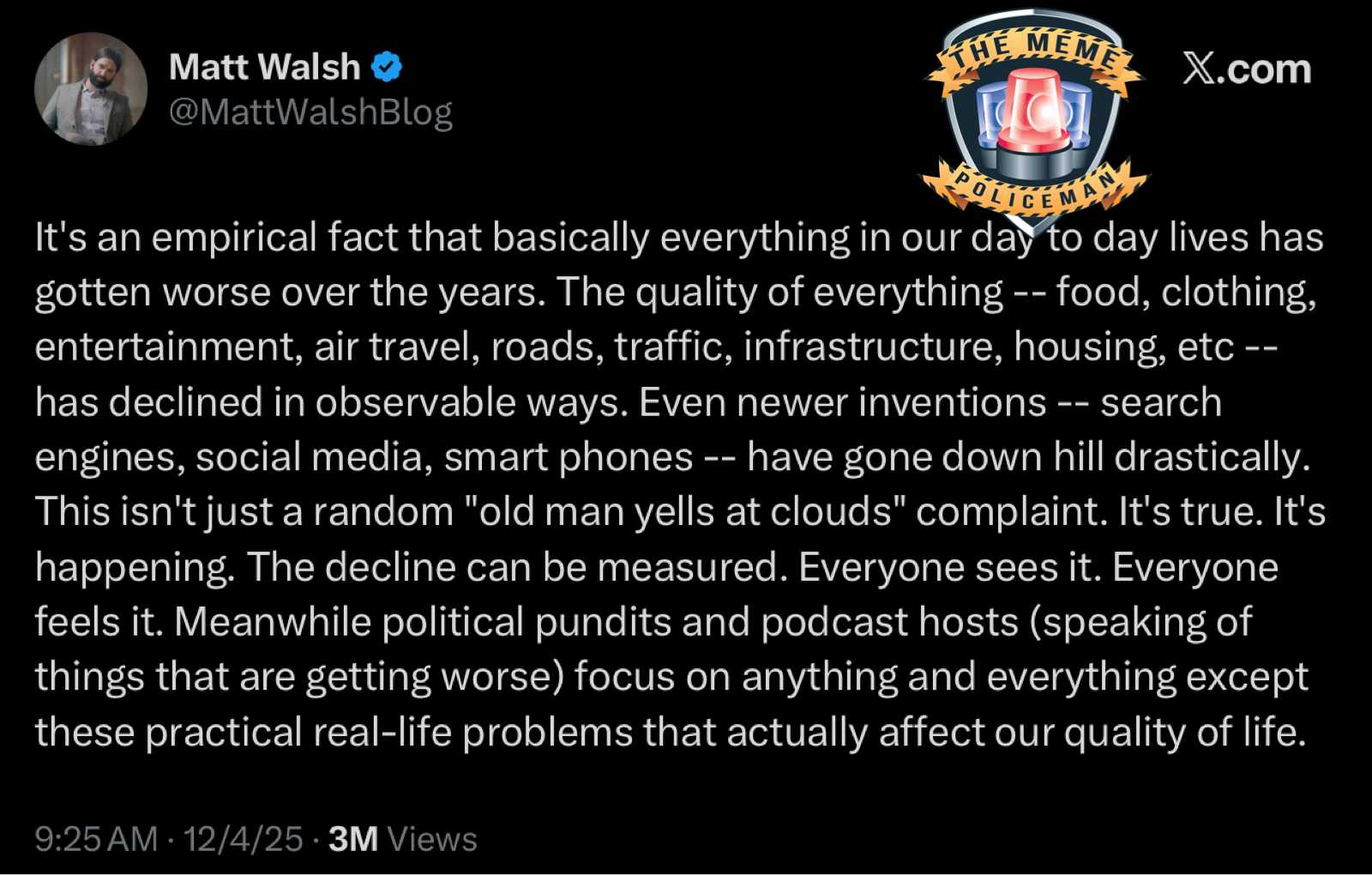


▪️There is ~ a 0% chance that any of these books are banned from your local library, and today, if anyone was banning most of these, it would come from the left. But the whole “banned book” hoopla is a sham to begin with, here’s the truth behind it.
▪️These aren’t “the most banned books.” Some of them appear on the American Library Association’s (ALA) list of classics that have been banned or challenged. But most examples they give are from decades ago, often in other countries.
https://www.ala.org/advocacy/bbooks/frequentlychallengedbooks/classics
▪️For example, the most recent “banning” of To Kill a Mockingbird they cite is from 2007 in a NJ school, where a resident “feared the book would upset black children reading it.” But it was retained, no ban. In fact, they cite no instance of it being banned in any US library.
▪️The examples the ALA give of Animal Farm being banned were in Moscow and The United Arab Emirates. It turns out when you dig into the ALA’s “banned book lists” they almost exclusively mean books that are challenged, not banned in the US.
▪️Which is why their list is called “most challenged books,” not most banned. They take any instances of people challenging a book to their local school board or city council (usually calls to move them to age appropriate areas or sections) as challenging.
https://www.ala.org/advocacy/bbooks/frequentlychallengedbooks/top10
▪️The ALA doesn’t have any real examples of books being banned, otherwise they would have an actual banned book list! Instead, they dishonestly call it “banned book week” and when you click on their “book ban data” it brings up “banned and challenged books” and if you read carefully you notice it’s all challenges and no actual bans.
▪️Hidden in their own methodology the ALA thankfully admits:
🔹 “ALA does not consider weeding of an item based on criteria defined in a library or school district's policy to be a ban, nor do we characterize a temporary reduction in access resulting from the need to review materials to be a ban.”
https://www.ala.org/advocacy/bbooks/book-ban-data#methodology
▪️Thus, since the vast majority of “bans” in the news are simply schools removing or moving books due to school policies on explicit content and age appropriateness, there are no real bans they can cite. But they call it “banned book week” anyway, and get millions to go along with it.
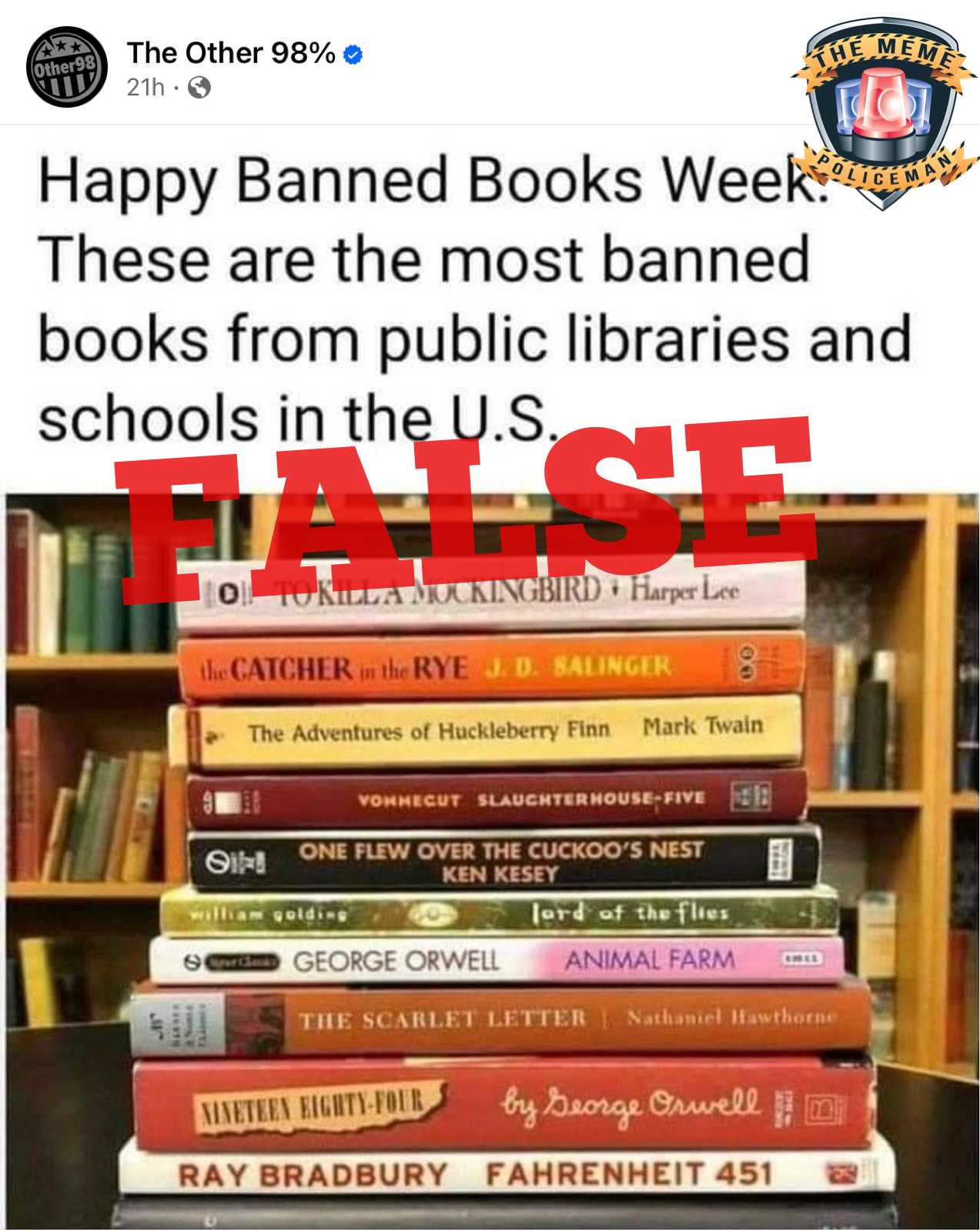
So many of these right wing accounts are just whiners now, this is a diatribe about automatic sinks and towels, the horror! As I explained in a prior post, most of the newer terminals have great bathrooms, some now have completely private stalls and plenty of them. The worst and most crowded airport bathrooms are invariably found in aging terminals that are decades old. It’s a reminder that airports were usually drab and uncomfortable.
I think the heyday of the air hand-dryers was like 15-20 years ago, where often you couldn’t find real towels. Now you can at least usually get real paper towels in airport bathrooms. Remember those old cloth roller towels that would go in a loop and somehow “clean” themselves? Yuck! Public bathrooms have always been gross, it seems some are deliberately having selective memories.
Airport food and drinks were always expensive, but now practically everyone brings those huge cooler flasks with them and fills them up. So not sure what he means that ...

I first critiqued this terrible take by looking at how food has actually improved substantially. Even though I said the same could be done in every category, people said “you’re only doing food.” So let’s do air travel and see why it’s not gotten better, not worse.
▪️Aircraft have greatly improved. Just 15-20 years ago, many domestic routes (~15%) were flown by turboprops like the Brasilia, Dash 8 or Saab. Now, almost everything is in jets, and most aircraft have WiFi. Some even have Starlink, where you probably have faster WiFi than your home. Most major airlines offer dozens or hundreds of movies and shows to watch.
▪️Newer designs like the 787 have lower cabin altitudes and improved humidity, which make a huge difference in passenger comfort on long haul flights. The first/business class international market has gotten very competitive globally, with many carriers offering excellent service and amenities. Pods, suites, showers, etc. Coach still sucks but is dramatically cheaper ...
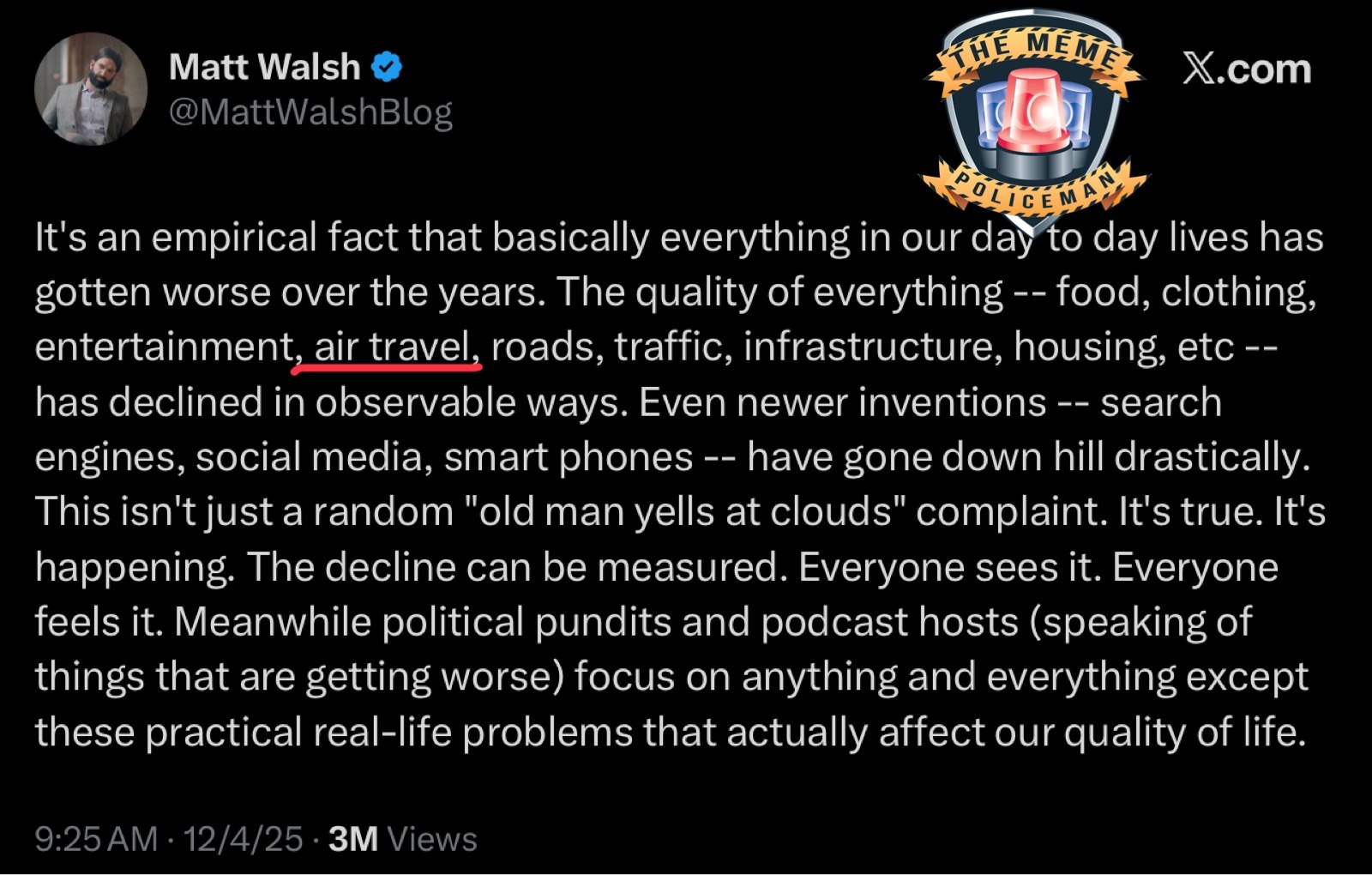
This is the complete opposite of an empirical fact. The right has now joined the left in being pessimistic about the modern world and completely unappreciative of the amazing abundance we now have. I’ll just focus on food here, but you could do it for almost every category.
▪️Fresh produce used to be available only in season. In the winter it was canned or frozen. People used to send fruit for Christmas gifts, it was that much of a luxury good. Now, you can get giant, sweet berries year around in every grocery store. Corn on the cob in February. Not to mention once rare items like dragon fruit, heirloom tomatoes or baby bok choy.
▪️If you didn’t live on the coast, seafood was either not available, frozen, or extremely expensive. If you lived in the Midwest and traveled to coastal locales you would quite literally be able to eat food you had never seen. Salmon has become much more abundant and accessible. You can get fresh ahi at Walmart today. Sushi and oyster bars exist everywhere ...