

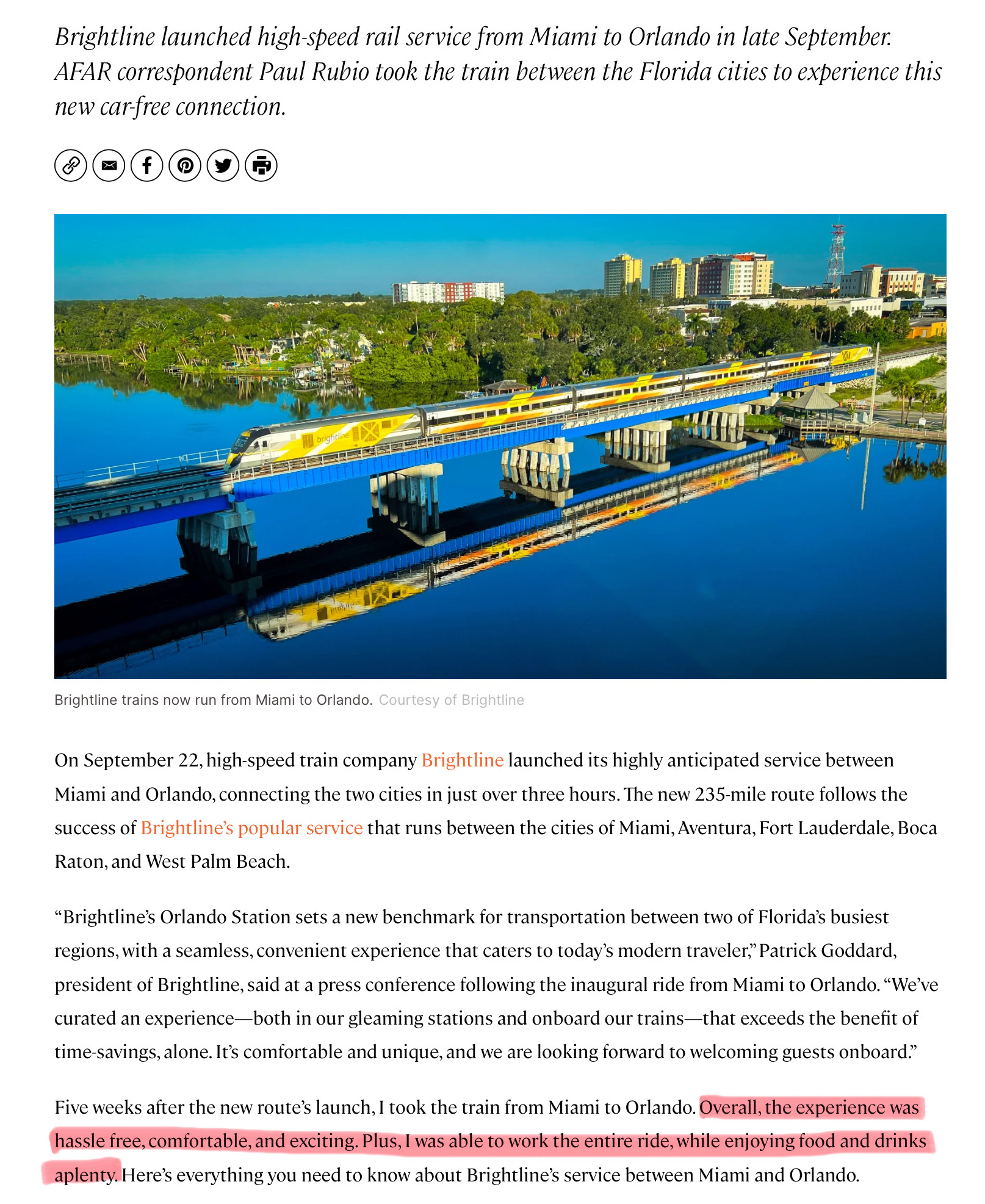
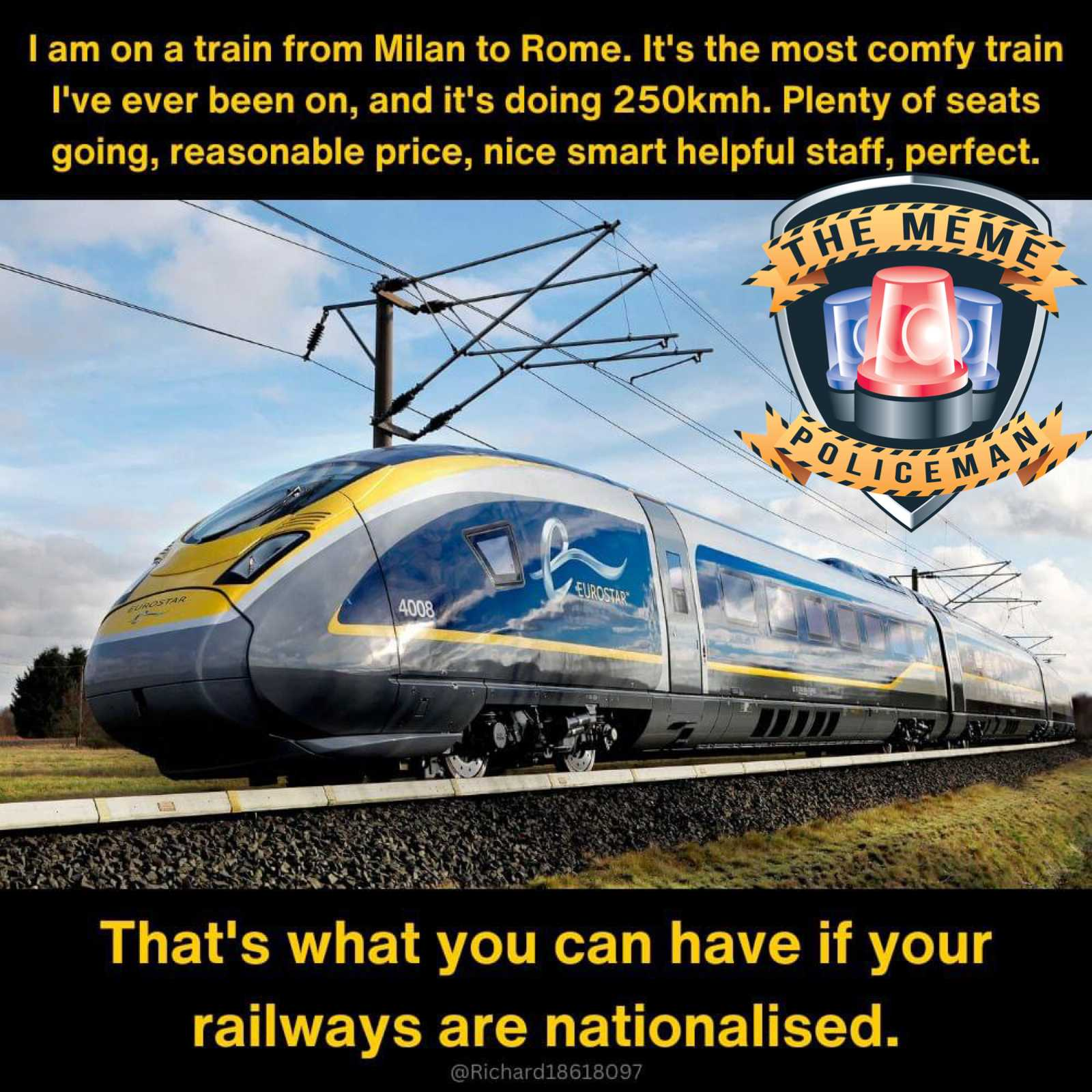
▪️You can have the same experience in the US with the new Brightline trains that run from Miami to Orlando. Comfy seats, great service, Starlink internet, top speed of over 200 km/hr, fares starting at $79, but privately run.
https://www.afar.com/magazine/brightline-train-review-riding-floridas-high-speed-rail
▪️Brightline has other projects in the works, like a route between LA and Vegas, which is breaking ground this year and ambitiously projected to be completed by the Summer Olympics in 2028. It’s partially subsidized by the govt, but mostly private funds.
https://www.dot.nv.gov/projects-programs/transportation-projects/brightline-west-high-speed-rail-project
▪️Unfortunately, Brightline’s Florida ridership has been below forecast, and they are issuing junk bonds for new funding. Whether or not it succeeds will depend on the market, perhaps high speed rail just doesn’t make sense in the US, but they’ve shown how a privately run railroad can be built quick and efficiently. And if it fails, it’s primarily a loss for investors, not taxpayers.
https://www.bloomberg.com/news/articles/2024-01-26/brightline-florida-s-high-speed-railroad-slashes-2024-ridership-forecast?embedded-checkout=true
▪️Meanwhile, the “nationalized” high speed rail boondoggle in CA drags on. In 2008 it was pitched to taxpayers as a high speed rail connecting LA to SF, completed by 2020 at a cost of $33B. As of 2024, no rail exists and no estimates are given for completion.
▪️Now, they estimate it will cost $35B just for the “train to nowhere” route from Merced to Bakersfield, which might be completed by 2030-33. The rest of the track will now cost an additional $100B! If it ever gets completed. A private project would have smartly been abandoned long ago, but “nationalized” projects can burn through endless money and timetables.
https://www.latimes.com/california/story/2024-03-21/high-speed-rail

So many of these right wing accounts are just whiners now, this is a diatribe about automatic sinks and towels, the horror! As I explained in a prior post, most of the newer terminals have great bathrooms, some now have completely private stalls and plenty of them. The worst and most crowded airport bathrooms are invariably found in aging terminals that are decades old. It’s a reminder that airports were usually drab and uncomfortable.
I think the heyday of the air hand-dryers was like 15-20 years ago, where often you couldn’t find real towels. Now you can at least usually get real paper towels in airport bathrooms. Remember those old cloth roller towels that would go in a loop and somehow “clean” themselves? Yuck! Public bathrooms have always been gross, it seems some are deliberately having selective memories.
Airport food and drinks were always expensive, but now practically everyone brings those huge cooler flasks with them and fills them up. So not sure what he means that ...

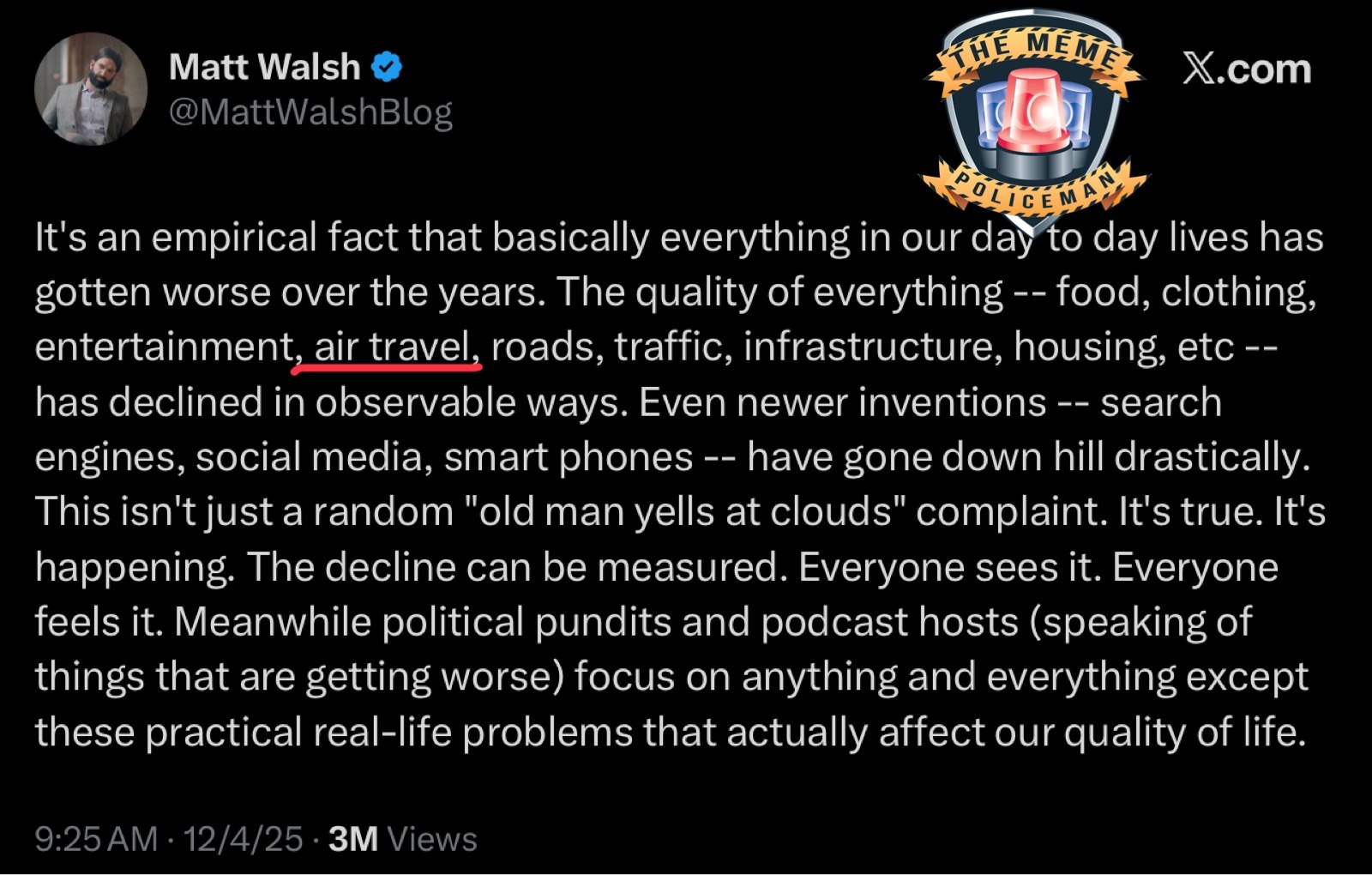
I first critiqued this terrible take by looking at how food has actually improved substantially. Even though I said the same could be done in every category, people said “you’re only doing food.” So let’s do air travel and see why it’s not gotten better, not worse.
▪️Aircraft have greatly improved. Just 15-20 years ago, many domestic routes (~15%) were flown by turboprops like the Brasilia, Dash 8 or Saab. Now, almost everything is in jets, and most aircraft have WiFi. Some even have Starlink, where you probably have faster WiFi than your home. Most major airlines offer dozens or hundreds of movies and shows to watch.
▪️Newer designs like the 787 have lower cabin altitudes and improved humidity, which make a huge difference in passenger comfort on long haul flights. The first/business class international market has gotten very competitive globally, with many carriers offering excellent service and amenities. Pods, suites, showers, etc. Coach still sucks but is dramatically cheaper ...
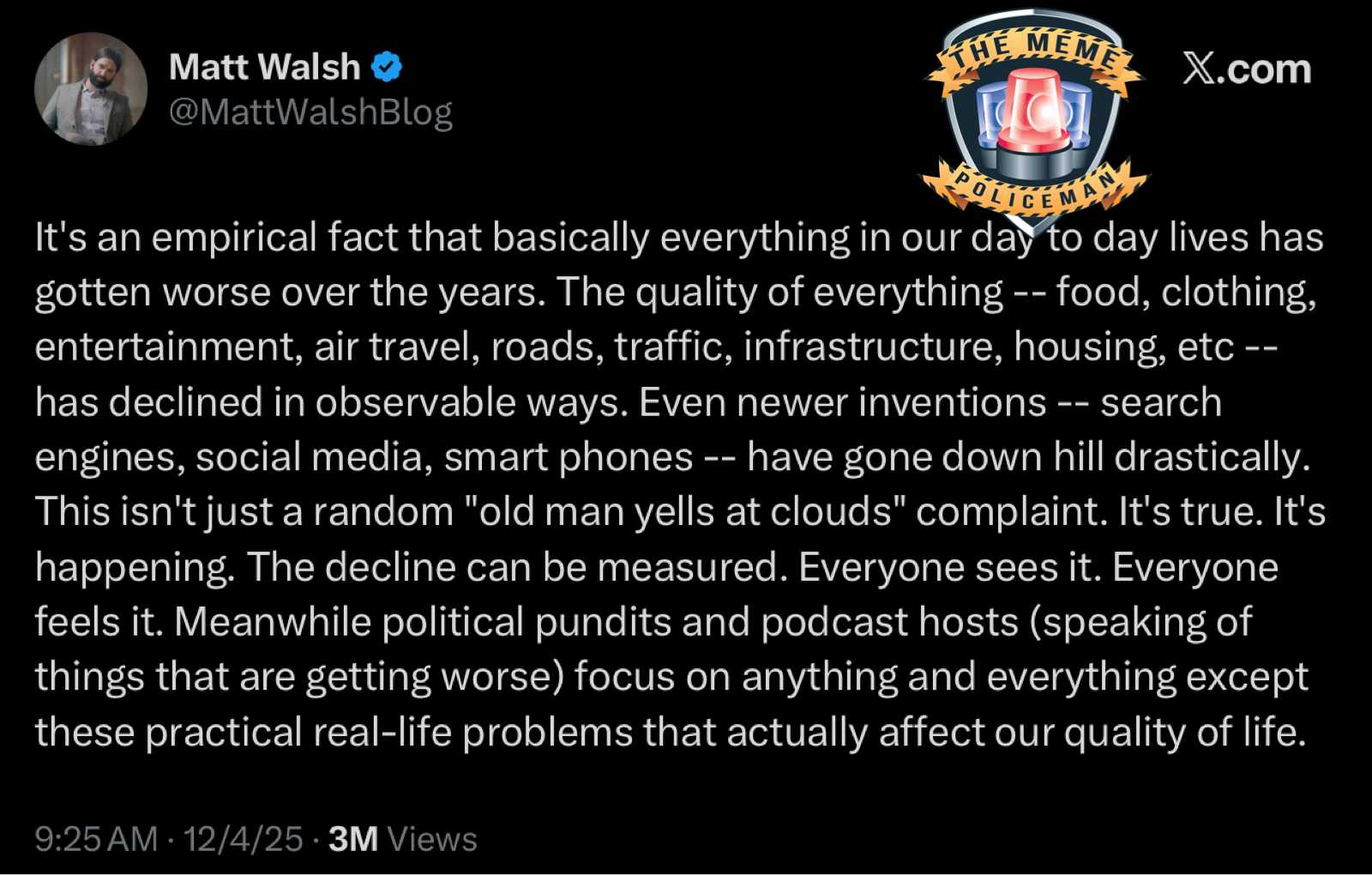
This is the complete opposite of an empirical fact. The right has now joined the left in being pessimistic about the modern world and completely unappreciative of the amazing abundance we now have. I’ll just focus on food here, but you could do it for almost every category.
▪️Fresh produce used to be available only in season. In the winter it was canned or frozen. People used to send fruit for Christmas gifts, it was that much of a luxury good. Now, you can get giant, sweet berries year around in every grocery store. Corn on the cob in February. Not to mention once rare items like dragon fruit, heirloom tomatoes or baby bok choy.
▪️If you didn’t live on the coast, seafood was either not available, frozen, or extremely expensive. If you lived in the Midwest and traveled to coastal locales you would quite literally be able to eat food you had never seen. Salmon has become much more abundant and accessible. You can get fresh ahi at Walmart today. Sushi and oyster bars exist everywhere ...